
Will
A 1926 essay by Ernst Jünger on will and necessity, newly translated with notes

Translator’s Introduction
Ernst Jünger’s essay Wille (“Will”) was published in Die Standarte1 on 6 May 1926, only days after Das Blut. Both essays were later intended for inclusion in the projected cycle Grundlagen des Nationalismus (“Foundations of Nationalism”)2, a work outlined but never brought to completion. While Das Blut unfolds in a symbolic and ontological register, Wille occupies a more reflective and diagnostic position within the same horizon.
The essay belongs to the immediate postwar period in which Jünger and his generation were compelled to confront defeat. The First World War had not merely ended in military collapse; it shattered the assumptions of the nineteenth-century liberal order and exposed the fragility of the Enlightenment image of man as master of history. In this setting, the question of will could no longer remain a speculative problem. It became an existential demand directed at a generation that had willed with intensity and witnessed the failure of its efforts.
Jünger therefore distinguishes his inquiry from the classical debate over free will. He is not concerned with metaphysical indeterminacy or inherited doctrinal disputes. He asks what can be effected within reality after catastrophe. The essay moves from reflection on generational failure toward the recovery of necessity as the ground of orientation. The will, in this setting, is not sovereign in the liberal sense but tempered in the ordeal wrought by the struggle of life, and brought into accord with what Jünger names necessity.
The tone of Wille is restrained. It lacks the mythic compression and symbolic density that characterize Das Blut. Rather than invoking blood and destiny as primary realities, it proceeds through analysis of the spiritual dislocation of the postwar generation. Yet the conceptual structure is continuous. Its vocabulary already anticipates the later architecture of Der Arbeiter (“The Worker”), where Jünger presents the emergence of a new type of man formed under the pressures of total mobilization.
In translating this essay, care has been taken to preserve the disciplined cadence of the original without importing modern idiom or retrospective interpretation. Key terms have been rendered consistently across the related essays of this period so that the projected cycle maintains its integrity. Where the German employs stark or abrupt constructions, they have been retained, since that severity belongs to the historical situation from which the essay emerged.
Read alongside Das Blut, Wille reveals a different aspect of Jünger’s early and continually evolving worldview. It is less concerned with symbolic foundations and more with orientation after collapse. It records a moment in which a defeated generation refused both nihilistic despair and facile optimism, and instead sought meaning in the alignment of will with necessity. In that alignment Jünger locates the possibility of greatness even in failure.
End of Translator’s Introduction
WILL
Die Standarte, May 6, 1926
Every new experience confronts us with a task. We must first bring it into clarity, then subject it to judgment, so that it may be placed in the service of the future. In this movement we pass from observation into the stricter realm of will. What the soul has tested and recognized must assume form and press toward action. Higher feelings give rise to heroic deeds; convictions become weapons; faith becomes command.
Our question has nothing to do with the problem of free will that runs through the history of religion and philosophy from antiquity to the present. It has been affirmed and denied in turn, yet this dispute has brought no one nearer to reality. The acceptance or rejection of free will expresses only the prevailing sense of life of a given epoch.
We encounter something similar in our own time. In the most advanced sciences there is an inclination to deny free will. The philosophy of history speaks of suprapersonal forces that subordinate individual life. Neovitalism3 rejects the doctrine of chance and posits a creative life force beyond the individual. For us these are signs and nothing more. We do not ask whether they are true. We ask how we are to assert ourselves within what is.
With Marx we agree that the point is not to interpret the world, but to change it. Yet we raise this demand not merely as thinkers, but as men who act and will. Rational knowledge is only one element of our stance. It must stand beside the others; it must not rule them.
When we examine the strength of our will, we do not rely upon reason. We are driven by another relentless sense that arose from an inner catastrophe following a greater external disaster. We willed as fiercely as men can will, and in the end our will failed.
We experienced the elemental forces of war and revolution. Like natural catastrophes they swept across our world, mercilessly stripping away simple joys, sorrows, and hopes. We saw a victory honestly earned and long believed in handed over to the enemy. We witness daily how the beautiful, the good, and the just are fervently proclaimed, yet life does not deviate a single step from the great line of primordial and eternal law.
We sought someone to blame. Yet whatever benefit came of it lay only in recognizing the necessity, inevitability, and inner coherence of what had occurred. We asked after the meaning of our experience and came to see that this meaning differed from what we had first intended. Our will had been directed elsewhere than we believed. Since then we have stood in uncertainty and asked what we are capable of effecting at all. It lies beyond our strength to will more intensely than we willed then.
Our generation has the right to point to its achievements and need not feel shame before its fathers. Yet all our efforts were in vain. Failure created a division within us. It shook our inner foundations while hardening our outward strength.
How secure the world of our fathers appeared. They were children of victory and Enlightenment. They placed in man the source of development and regarded him as master of the future. Thought and will were decisive, and their sum bore the proud name of progress. We need not mock this word. Their position possessed integrity, and integrity commands respect.
Yet we cannot make it our own. Our experience forbids it. On our lips the word progress has become hollow. To utter it would be to deny our ordeal and diminish the heroes and saints of earlier ages. We have no need of it, even if our exertions did not lead to victory. We remain proud of those exertions. Does a man betray himself because fortune has turned against him?
Rather we hold fast to the faith of our fathers, to faith in the reliability and rational order of the world. Even against our own inclination we must believe that what transpires bears divine meaning, that a higher purpose moves through events beyond our judgment. Otherwise the ground falls away beneath our feet and we hang over the abyss of chaos and meaninglessness.
What use is rational attachment to things if they lack depth and fail to reflect an inner order? We must believe that the world is meaningful and ordered, or we become inwardly shaken men who either attempt to impose arbitrary designs upon the world or drift through existence without direction.
Having recovered from the shock, we sense that a new center of gravity has formed within us. Our generation lives in tense expectancy. Prophets arise, and each word carries new weight, provoking unexpected reactions. The generation once content with Enlightenment begins again to take religion seriously. Significant works from our own and foreign cultures are republished and reinterpreted in ways unthinkable only a decade ago. Speech and writing multiply to such an extent that even the most sober man cannot escape a growing unrest.
New associations are founded, old ones revived. The sense that the logical structure of the world has collapsed drives men toward what lies beyond the senses. This impulse leaves its mark everywhere, from the highest concerns of spirit to the trivialities that crowd the newspapers. War stands as the great turning point. It reaches into metaphysics and medicine, into our understanding of soul and state, into our relation to money and law. Everywhere men grope for orientation. A little more faith, a little more seriousness, and we might already stand within another world.
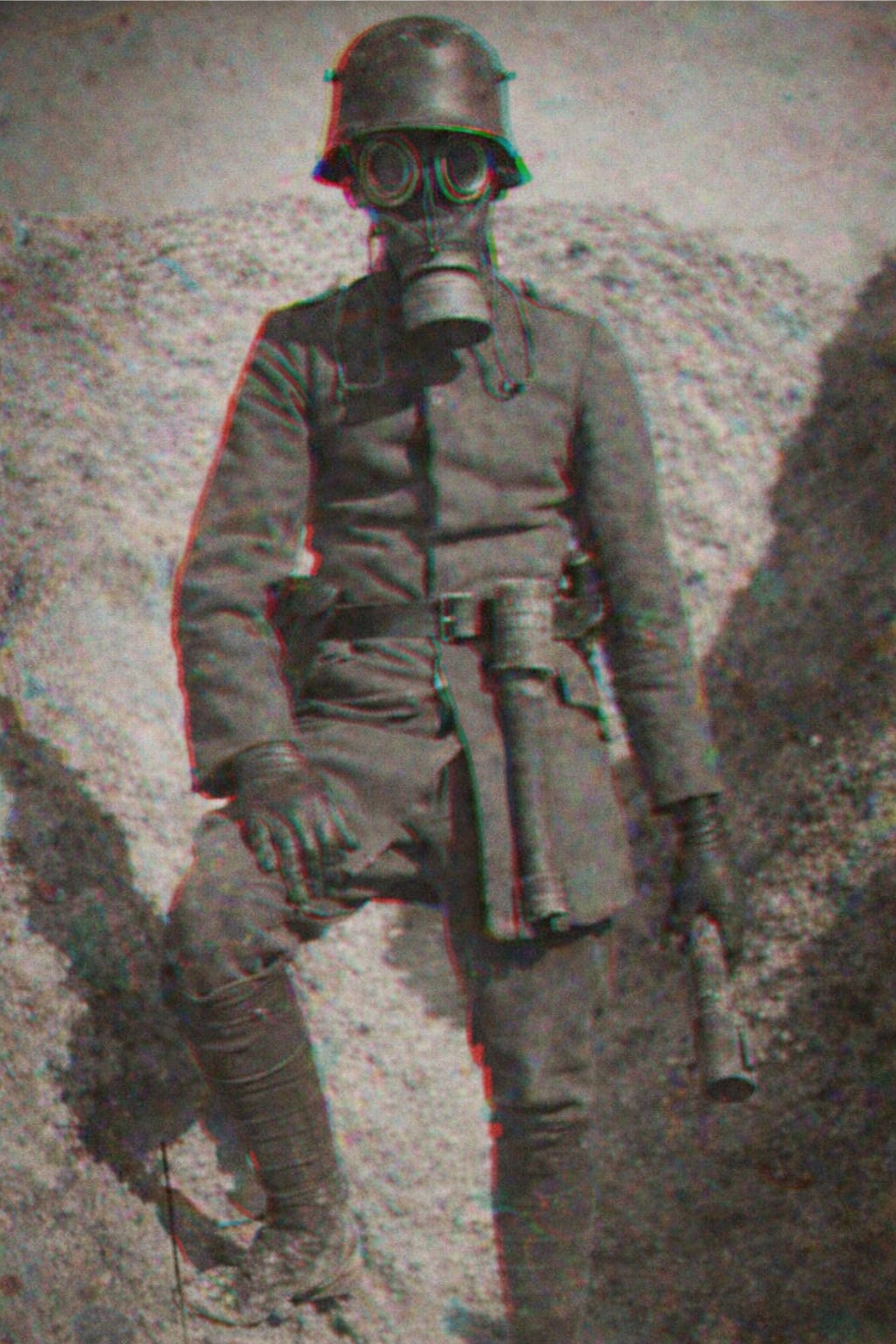
Faith in the sacred meaning of events fills us, we who were tempered in the burning womb of the trenches and who take pride in our past. Though that past ended in defeat, it was not without meaning, whatever the petty trader may claim. That for which men die is never meaningless. Even a single death bears meaning.
If we were placed again in that situation today, we might act differently in particulars. In essence, however, our stance would remain unchanged. Let them reproach us as though we had learned nothing. There are things that cannot be taught, for they are inborn.
We do not judge by success or failure, as the crowd does. We ask what must be done. Whether our efforts will bear fruit we cannot know. We know only that they must bear meaning.
The great source of this necessity we call fate. Through fate we do not appear as blind or accidental figures, but as a creative force whose end remains hidden from us. Perhaps it has no end. Perhaps it is pure divine movement, complete in every moment.
Die Standarte (“The Standard”) was a short-lived nationalist periodical that appeared in 1926 during the turbulent years of the Weimar Republic. Edited by Franz Schauwecker, it served as a forum for younger veterans and writers of the Conservative-Revolutionary milieu seeking a new political and spiritual orientation after the collapse of the German Empire. Though its lifespan was brief, the journal occupies an important place in Jünger’s early development, as several essays later associated with his projected cycle Grundlagen des Nationalismus (“Foundations of Nationalism”) first appeared in its pages.
Grundlagen des Nationalismus (“Foundations of Nationalism”) was a projected cycle of essays Jünger outlined in the mid-1920s but never brought to completion. The series was intended to include Wille (“Will”), Das Blut (“Blood”), and Charakter (“Character”), forming the conceptual foundation of his early nationalist phase. Though the volume did not appear as originally conceived, these essays mark his attempt to articulate the spiritual and political orientation emerging in the aftermath of the First World War.
Neovitalism was an early twentieth-century current within German biology that rejected mechanistic and strictly Darwinian explanations of life. Its most prominent representative, Hans Driesch (1867–1941), argued that living organisms could not be reduced to physical and chemical processes alone, positing instead an organizing life principle operating beyond material causation. Jünger encountered these ideas during his studies in Leipzig. His reference here does not endorse neovitalism as doctrine, but situates it among contemporary attempts to displace liberal notions of autonomous individual agency in favor of suprapersonal forces shaping life and history.
A most enlightening, edifying, and entertaining essay — thank you. (And Jünger figures prominently in Manalive's live cinema exploration of humanity confronting mortality, staged across historical, sacred, and performative spaces. Jünger, the German warrior-philosopher, Owen the British "moral witness", and Péguy, the French Catholic mystic will serve as intellectual and emotional instruments for a metaphysical confrontation with Death, through which our story will explore whether transcendence is still possible in a post-sovereign, post-Christian, post-heroic West.) https://www.manalivemediagroup.com/dwp-teaser